
All-Cap Growth
Weight CASH COWS based on earnings growth and total return potential
Inception
7/31/1995
Date as of
12/31/2025
Lead Portfolio Managers
Tim Call, CFA
(20-year tenure)
Lead Portfolio Managers
Mark Livesay, CFA
(16-year tenure)
All-Cap Growth
CASH COW Strategy
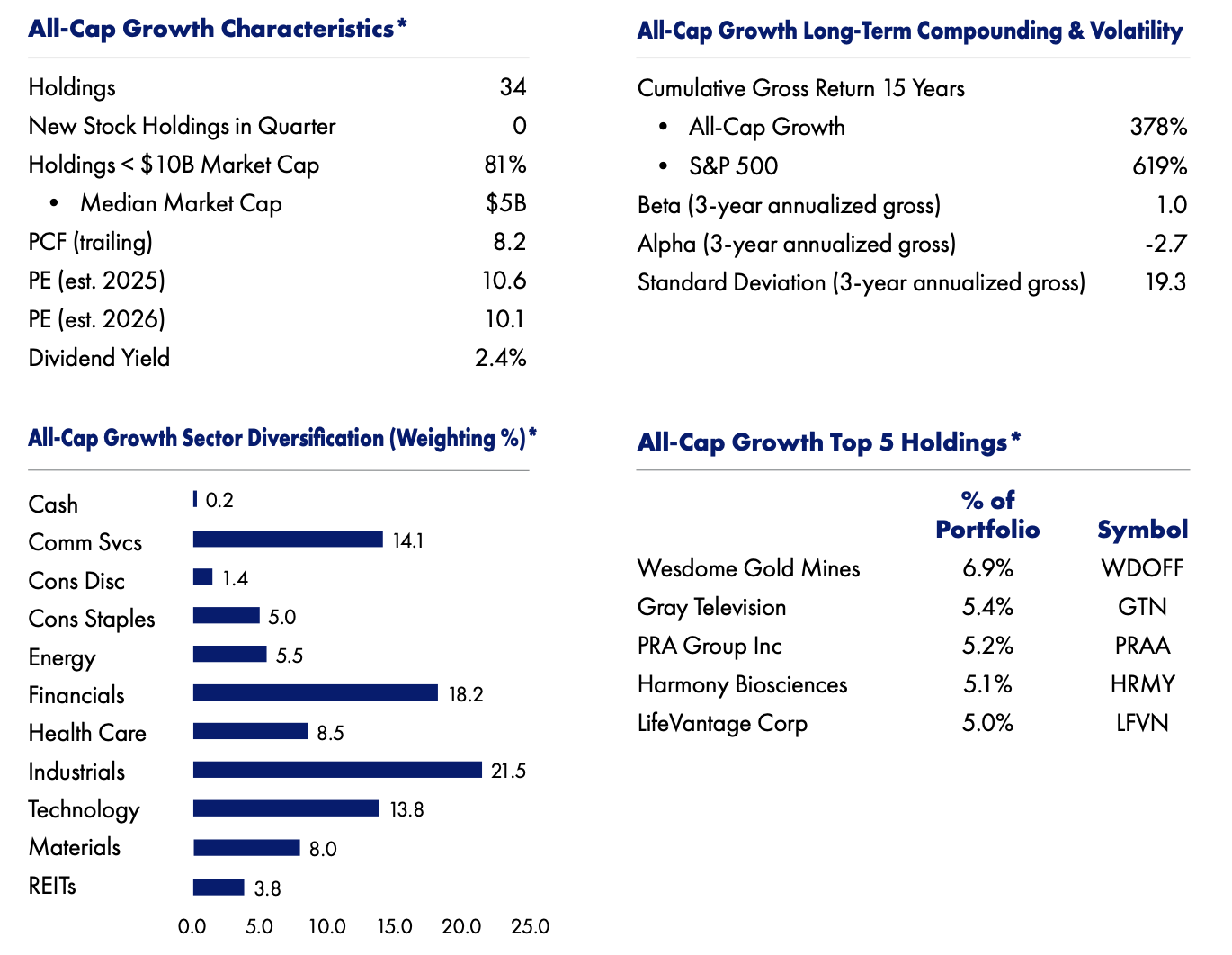
Highly concentrated portfolio of CASH COW companies (approx. 28-40) of all sizes with strong operating and free cash flow. Holdings are weighted based on earnings growth, above-average dividend yields and total return potential. Attractive entry valuations determined by CMC’s intrinsic value estimates allow for margin of safety and price returns that could exceed compounded earnings growth.
Growth Objective
- Long-term Capital Appreciation
- High Growth Potential
- Size, Sector & Industry Diversification
- Tax Efficiency
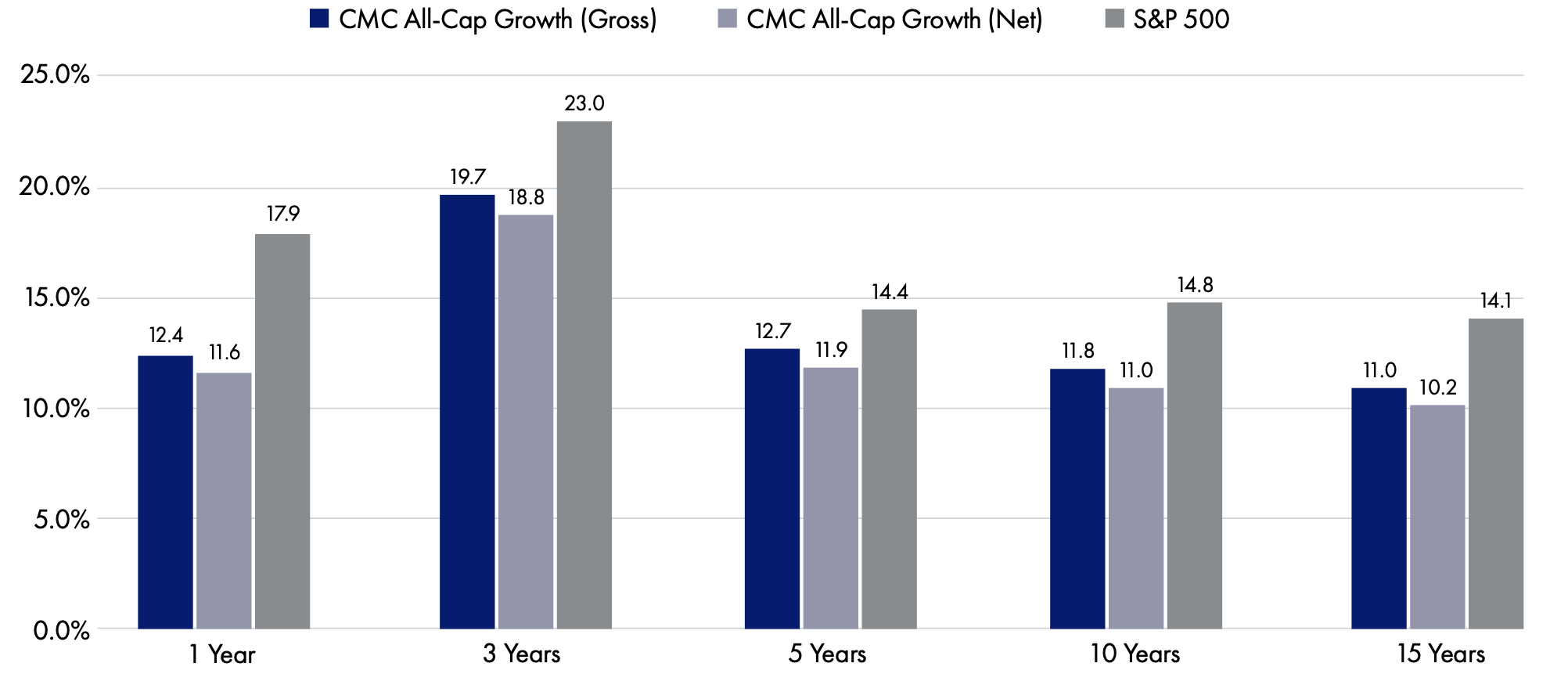
All-Cap Growth Annualized Performance Summary (Inception 7/31/1995)
As of 12/31/2025
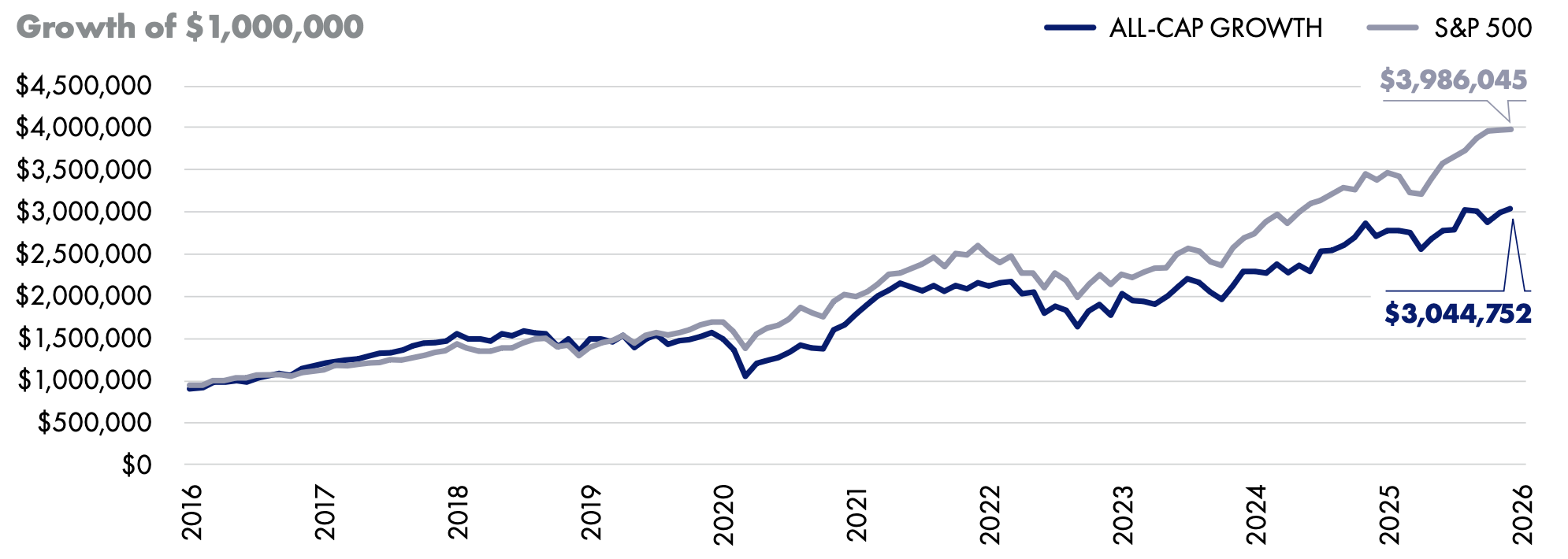
All-Cap Growth Composite Gross Returns
(12/31/2015-12/31/2025)
Disclaimers
The Capital Management Corporation claims compliance with the Global Investment Performance Standards (GIPS®) and has prepared and presented this report in compliance with the GIPS standards. The Capital Management Corporation has been independently verified for the periods 1 January 1997 through 31 December 2024. A firm that claims compliance with the GIPS standards must establish policies and procedures for complying with all the applicable requirements of the GIPS standards. Verification provides assurance on whether the firm’s policies and procedures related to composite and pooled fund maintenance, as well as the calculation, presentation, and distribution of performance, have been designed in compliance with the GIPS standards and have been implemented on a firm-wide basis. The All-Cap Growth Composite has had a performance examination for the periods 1 January 2005 through 31 December 2024. The verification and performance examination reports are available upon request. GIPS is a registered trademark of CFA Institute. CFA Institute does not endorse or promote this organization, nor does it warrant the accuracy or quality of the content contained herein.
Notes:
- The Capital Management Corporation is an independent investment management SEC registered firm and is not affiliated with any other entity. Policies for valuing portfolios, calculating performance, and preparing GIPS reports are available upon request.
- The All-Cap Growth Composite includes fully discretionary equity accounts which seek long- term growth using a diversified portfolio. Investments may include small, mid and large capitalization stocks with above average growth prospects. Prior to January 2020, the composite minimum was $100,000. Prior to September 2016, the minimum was $500,000, and prior to January 2016, the minimum was $1.0 million.
- The benchmark is the S&P 500 Index.
- Valuations are computed and performance is reported in US Dollars.
- Total gross-of-fee returns are presented before management fees but after all trading expenses and all wrap fees (which may include custody fees, investment management fees, trading expenses and client reporting fees) if applicable. Total net of fee returns are calculated using actual fees and/or model fees, where appropriate. The Capital Management Corporation’s current fee schedule is 1.00% on the first million in assets, 0.70% on the next four million, and 0.50% on the excess over five million.
- The composite was created on August 1, 1995, the composite’s inception date is January 1, 2004. A complete list of composite descriptions is available upon request.
- Composite dispersion is measured by the asset-weighted standard deviation of annual gross returns of those portfolios that were in the composite for the full calendar year. Where such portfolios number five or fewer, the standard deviation calculation would not be meaningful and that is indicated (n/m). Three-year standard deviation for both the composite (calculated using gross performance) and the benchmark index are shown beginning in 2011 in compliance with GIPS standards.
- Past performance is not to be construed as a guarantee of future performance.