
INVESTING FOR RETIREMENT
Ages to Know
It’s essential to know certain milestones and key deadlines when planning for retirement. Missing one might forego an opportunity to grow your nest egg or worse, incur penalties. Keep these dates in mind to maximize your retirement income.

Catch Up Contributions
Beginning at age 50 take advantage of catch-up contributions to your IRA or company retirement plan, such as a 401(k), 403(b) and 457(b). After maximizing your elective deferral annually at $23,000, the IRS allows individuals to contribute an additional $7,500 for each tax year.
Health Savings Accounts (HSA)
In 2024 the maximum deductible contribution for HSAs is $4,150 for individuals and $8,300 for a family. If you are 55 or older, you can contribute an extra $1,000 to your account each year.
Penalty-Free Withdrawals
At age 59½, you can begin making penalty-free withdrawals from your retirement accounts (e.g. 401ks and IRAs). They may still be subject to income taxes depending on whether the funds were contributed on a pretax or after-tax basis. 401(k)s and traditional IRAs will generally owe income tax on withdrawals, while Roth account withdrawals are tax-free.
Note: If you separated from your employer at age 55 or later (age 50 for qualified public safety employees such as law enforcement officers, private and public sector firefighters, and air traffic controllers), you do not have to pay a 10% early withdrawal penalty from a qualified retirement plan.
Social Security Eligibility
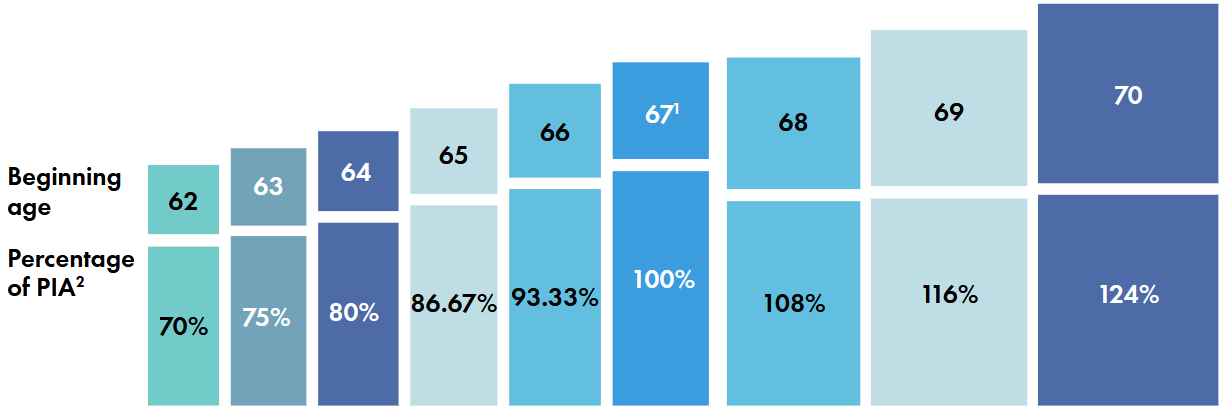
You can begin receiving your social security benefits when you turn 62. However, you are entitled to full benefits when you reach your full retirement age (67 years old). If you delay taking your benefits from your full retirement age up to age 70, your benefit amount will increase.
Effect of taking retirement benefits (DOB: Jan. 2, 1960)
Click here to use the Social Security Administration’s Quick Benefit Calculator.
Source: SSA.gov. 1 Represents Full Retirement Age (FRA) based on DOB January 2, 1960. 2 PIA = The primary insurance amount is the basis for benefits that are paid to an individual.
Medicare Eligibility
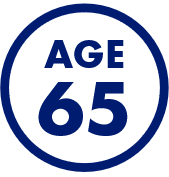
If you are not covered by an employer health plan, you’re required to enroll in Medicare during a seven-month window that begins three months before the month you turn 65. It includes the month of your 65th birthday and the subsequent three months. The two main ways to get Medicare coverage care: Original Medicare and Medicare Advantage. It’s a complex program so do your research or seek help from a specialist to get the right coverage for your healthcare needs. For more information visit Medicare.gov.
Qualified Charitable Distributions
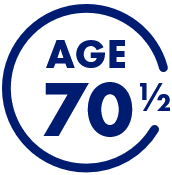
In 2024, individuals who are at least 70½ years old or older can donate up to $105,000 ($210,000 for a married couple) to one or more charities directly from a taxable IRA which counts towards their required minimum distributions for the year. As a result, donors may avoid being pushed into higher income tax brackets and prevent phaseouts of other tax deductions, though there are some other limitations.
Required Minimum Distributions
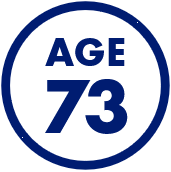
The SECURE 2.0 Act raised the age of required minimum distributions (RMDs) from standard retirement plans (excluding Roth IRAs) to 73 for people who turn 72 on or after Jan. 1, 2023. Generally, your RMD is calculated for each account by dividing the prior December 31 balance of that IRA or retirement plan account by a life expectancy factor that the IRS publishes in Tables in Publication 590-B, Distributions from Individual Retirement Arrangements (IRAs). For more information, visit IRS.gov.
Sources: IRS.gov; Schwab; Fidelity; USNews; SSA.gov.

Get The Toolkit
Upon request, CMC offers its Investing for Retirement Toolkit. A popular tool for our clients, it includes the latest retirement provisions, tax rules and budget worksheets to help you with your retirement plans
Contact us at information@the-cmc.com for a copy.